

A mini bag sealer is a heated wire in a handheld body: you run it along the open edge of a plastic bag and the two faces fuse. On the right material it is genuinely excellent, and it turns a half-eaten bag of crisps back into a sealed one. On the wrong material it does nothing, or it melts a hole. Knowing which is which is most of the value.
What it seals well
The target material is the multi-layer plastic film that snack packaging is made of — crisp bags, biscuit wrappers, nut packets, frozen vegetable bags, pet food liners, and the plastic bags that cereal comes in. These fuse cleanly and hold.
Vacuum-bag material works too, which is what makes the tool useful beyond snacks: you can cut into a large vacuum bag, take what you need and re-seal the remainder rather than decanting it into a container.
The four it cannot handle
- Cling film. Far too thin. It shrinks away from the heat and tears before it fuses.
- Cellophane. It is not a thermoplastic in the way the sealer needs. It scorches rather than welds.
- Kraft paper and paper-lined bags. Coffee bags are the common trap. The paper burns and the seal is cosmetic.
- Pure aluminium foil packs. Foil does not fuse to foil under a hot wire. Metallised plastic film is a different thing and does work, which is why some foil-looking bags seal and others do not.
Very thin produce bags are the marginal case. They will sometimes take a seal and will sometimes just perforate. If the bag feels flimsy between finger and thumb, expect the second.
Why your seal came out weak
Three things account for nearly every bad seal, and none of them are the tool.
The first is crumbs and grease on the sealing line. Anything between the two faces stops them touching, and salt and oil from the bag’s contents are precisely the contamination that gets there. Wipe the inside of the strip before sealing, or fold the top over once so you are sealing a clean section.
The second is speed. The wire needs contact time. Dragging it along in one quick pass gives an intermittent seal that looks continuous and is not. Slow and steady, at a constant rate, is the whole technique.
The third is moisture. A damp inner face will not fuse. Anything that has been in a fridge and come out to condense needs a moment to dry first.
The bag has to be flat, which is harder than it sounds
The wire seals a straight line. Any wrinkle in the plastic where the two faces meet becomes a channel, and a channel is a hole however good the rest of the seal looks.
The reliable technique is to pull the bag taut between both hands before the sealer goes anywhere near it, then keep that tension while sealing. Most sealers have a magnetic base or a fridge magnet mount for precisely this reason: it frees the hand you would otherwise be using to hold the tool.
Bags with a gusset at the top — the folded pleat you find on coffee and pet food bags — are the hardest case, because the pleat is four layers thick at the edges and two in the middle. Flatten the pleat out fully first, or seal below it.
The practical limits
It is a resealing tool, not a preservation system. A sealed crisp bag stays crisp for days rather than weeks, because the seal excludes air arriving but does nothing about the air already inside. For genuine long storage you want the air removed, which is a vacuum sealer and a different price bracket.
The cutter half — most models pair the sealer with a blade — is more useful than it first appears, mainly for opening bags in a straight line so that the next seal has a clean edge to work with.
Charging, the wire, and how long it lasts
Most current models charge over USB-C and hold enough for a great many seals, which puts the practical constraint on remembering to charge it rather than on capacity. Older battery-powered units take AA cells and are worth avoiding purely on running cost.
The wire itself is the wear part. It is a thin heating element, and it fails eventually — usually by developing a cold spot that produces a seal with a gap in the middle rather than by dying outright. If your seals start failing in the same place every time, that is the wire rather than your technique.
A magnetic back is more useful than it sounds, because it means the sealer lives on the fridge door where you will see it. A sealer in a drawer gets used for a fortnight; one on the fridge gets used for years. That is not a specification, but it is the thing that determines whether the purchase was worth making.
Shop this guide
Picks from this category, priced in USD.
-
Kitchen gadgets
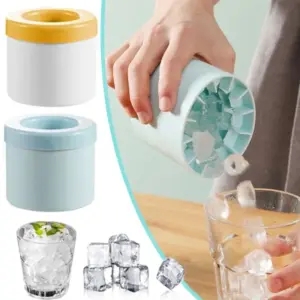
Silicone Ice Cube Cup – Squeeze-Release Mould That Drops Cubes
$9.99 Select options This product has multiple variants. The options may be chosen on the product page -
Kitchen gadgets
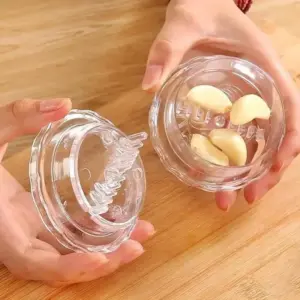
Garlic Twist Crusher – Mince Cloves Without a Board or Knife
$4.99 Select options This product has multiple variants. The options may be chosen on the product page -
Kitchen gadgets
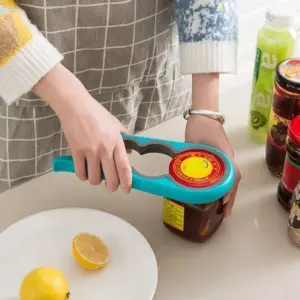
4-in-1 Jar Opener – Twist Off Stiff Lids, Caps and Bottles
$9.99 Select options This product has multiple variants. The options may be chosen on the product page
Frequently asked questions
Is it safe to seal a bag with food touching the seal line?
It will not harm you, but it will not seal either. Leave a couple of centimetres of empty bag above the contents. Overfilled bags are the most common reason a seal fails at the ends.
Can you reseal the same bag repeatedly?
Yes, until you run out of bag. Each seal costs you a centimetre or so, so a tall bag takes several rounds and a short one takes two.
Does it work on freezer bags?
Usually well — freezer bag film is thick and fuses reliably. It is one of the better uses for it, because a heat seal beats a zip closure for keeping frost out.
For the rest of the kitchen, see small kitchen gadgets worth buying and the kitchen gadgets collection. Storage that works outside the kitchen is in home organization gadgets that actually work.