
You know the drawer. It fights you on the way open and again on the way shut, and the scissors are somewhere under three takeout menus and a knot of charging cables. Most household mess isn’t a storage problem, it’s a friction problem. Things don’t get put away because putting them away is annoying. The best home organization gadgets remove that friction. This guide covers the ones that stay in use after the first tidy weekend, and the ones that quietly migrate to the donation box.
Why most home organization gadgets end up unused
The gadget is rarely the problem. The mismatch is. You buy an insert sized for the drawer you wish you had, the one belonging to a person who owns exactly four utensils and no elastic bands. Or you buy something that only works if you perform a small ritual every time: unclip the lid, lift the tray, set the thing inside at a particular angle. Nobody keeps that up on a Tuesday night with dinner half-made.
The organizers that survive share one trait: putting something away takes fewer moves than leaving it out. A hook by the door beats a labelled bin in the hall closet every time, because the hook is one motion and the bin is a small errand. Keep that test in mind for the rest of this guide.
Start with the drawers you open every day
Drawers are where the friction runs highest and the fix costs least. You open the same two or three constantly, so any improvement compounds.
The junk drawer deserves better than a shoebox lid
The classic failure here is one big tray with compartments that don’t match anything you own. Spring-loaded dividers work better: they push against the drawer walls and let you set the widths around your actual stuff, a narrow lane for pens, a wide one for the tape and the tiny screwdriver. A sheet of non-slip liner underneath stops the whole arrangement sliding to the back every time you shut the drawer, and batteries and loose cables need their own deep bin before they colonize everything else.
Deep drawers waste their best dimension
A deep drawer is mostly air. Tiered inserts and sliding upper trays give you a second usable level, so the things you reach for daily sit on top and the spares live underneath. In a dresser, vertical dividers let you file clothes front-to-back instead of stacking them, which means you stop excavating the bottom shirt. In the kitchen, adjustable fin-style dividers stand container lids on edge, the single tidiest thing you can do to a cupboard.
Closets, and the pile by the front door
Closets fail from the top down. There’s usually a stretch of dead air above the shelf and another below the hanging clothes, and both get ignored because nothing holds that space open.
Make the vertical space work
Slim non-slip hangers buy back real width on the rail without you throwing anything out, and cascading hooks let you hang a second garment beneath the first. Shelf dividers stop sweater stacks leaning into each other and collapsing. Under-shelf baskets clamp onto a shelf you already have and use the dead air below it, which suits the small flat things that get lost behind everything else. Hanging fabric towers turn one section of rail into five compartments.
Build a proper landing strip
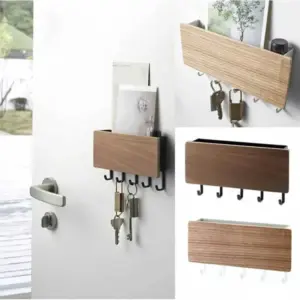
The pile by the door exists because keys, mail, sunglasses and one glove have nowhere to be. A landing strip fixes it: hooks at the height the shortest person in the house can reach, a shallow tray for pocket contents, a wall pocket for mail, and a boot tray with a real lip so melted snow stays off the floor. Four small purchases, and your entryway gets a personality transplant.
Countertops and the flat-surface problem
Any empty flat surface is an invitation. The counter collects mail because it’s there, and once two items land, a third feels normal. There are two real answers: get things off the surface entirely with wall-mounted holders, magnetic strips or under-cabinet mounts, or corral them into one tray so the clutter reads as a deliberate zone instead of a spill.
Riser shelves are the quiet winner in cabinets and on counters alike, because they double the usable depth of a space you were only using the front of. If most of your counter chaos is cooking gear rather than paperwork, our guide to kitchen gadgets worth the drawer space goes deeper on prep and storage tools that don’t hog room.
Cables, chargers, and the nest behind the furniture
Behind every tidy living room is a power bar with six cables braided into something the cat sleeps on. The fix is layered. A fabric or split sleeve gathers the run into one thick cord. Adhesive channels or clips guide it along a baseboard or furniture leg instead of across the floor. A cable management box hides the power bar and its blinking lights entirely, and reusable hook-and-loop ties take up the slack you’ll never need.
Label both ends of anything you might one day want to unplug; masking tape and a pen work fine. If the worst of your cable situation lives under a desk rather than a TV, the companion piece on desk setup gadgets for a tidier workspace covers under-desk trays, monitor risers and the rest of the workspace problem.
How to choose home organization gadgets that last
Most disappointing purchases fail on one of a handful of predictable points. Run a candidate past these checks before it goes in the cart.
Fit, materials and mounting
- Measure the opening, not the space. Drawer boxes are often narrower than the drawer front, cabinet hinges eat width you assumed you had, and a shelf insert that’s a whisker too tall simply won’t go in.
- Prefer adjustable to exact. Spring-loaded dividers, expandable trays and modular bins survive a move to a different drawer or a different apartment. A perfect custom fit survives nothing.
- Match the material to the room. Untreated bamboo near a sink will eventually swell and warp, thin rigid plastic cracks first at the corner where it clips, and unstructured fabric bins slouch inward the moment they’re half empty.
- Ask how you’d clean it. Anything in a kitchen drawer will meet crumbs and something sticky. Inserts you can lift out and rinse beat moulded compartments you have to scrub in place.
- Take mounting seriously. Adhesive strips struggle on textured wallpaper, raw wood and steamy bathrooms. Tension rods slip on glossy tile. Screws are ugly for two minutes and reliable for years.
- Respect weight. Over-door racks and hanging towers sag or pull loose once you load them with the heavy things, so keep books, tools and tinned goods low and on something rigid.
Where these purchases usually go wrong
- Count the motions. If putting an item away takes more than a couple of moves, the household will quietly stop doing it and the gadget becomes a shelf ornament.
- Be wary of single-purpose gadgets for once-a-year problems. They take permanent space to solve a temporary annoyance.
- Buy one before you buy eight. A single divider or basket tells you within a week whether the format suits your habits, which is a much cheaper way to find out.
- Notice what a gadget assumes about you. Anything that only works when the contents are folded a particular way is asking you to change, not the drawer.
The other mistake is the matching bin set bought before you’ve sorted anything. You end up with volume you don’t need, or too little, and then you’re organizing around the containers instead of around your life. Sort first, count what’s left, then buy. And be honest about opaque versus clear: opaque containers hide the mess beautifully, right up until you need the thing inside one of them.
Shop this guide
Picks from this category, priced in USD.
-
Home organization gadgets
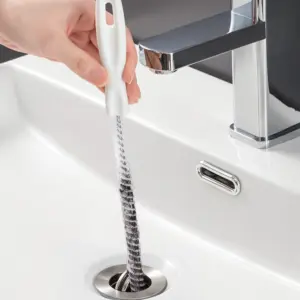
Drain Cleaning Utensil – Flexible Clog Remover
Price range: $3.49 through $3.99 Select options This product has multiple variants. The options may be chosen on the product page -
Home organization gadgets
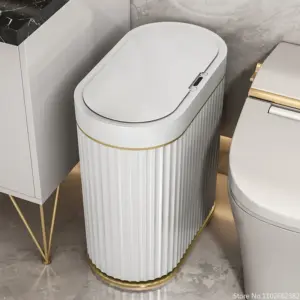
Motion Sensor Bathroom Trash Can – Slim 13.8 cm Hands-Free Bin
Price range: $69.99 through $74.99 Select options This product has multiple variants. The options may be chosen on the product page -
Home organization gadgets
Wall Key Holder with Shelf – 5 Hooks and an Entryway Tray
Price range: $12.99 through $14.99 Select options This product has multiple variants. The options may be chosen on the product page
Frequently asked questions
Where should I start if the whole place feels cluttered?
Start with the one drawer or surface that irritates you most this week, not the biggest project in the house. Empty it, clear out the obvious junk, then buy for what’s actually left. Buying storage before you know the volume is how you end up with bins holding air. One visible win usually creates the appetite for the next.
Do adhesive hooks and mounts actually hold?
On smooth, clean, fully cured painted surfaces they hold light loads well, provided you press firmly and wait before hanging anything. They get unreliable on textured walls, raw or oiled wood, and in rooms that get steamy. For anything you’d be genuinely annoyed to find on the floor, choose a screw fixing or a mechanical clamp instead.
Are home organization gadgets worth it in a rental?
Usually, as long as you favour damage-free formats. Over-door racks, tension-mounted shelving, freestanding drawer inserts and clamp-on under-shelf baskets all come with you when you move and leave the walls alone. Skip anything needing drywall anchors unless you’re comfortable patching later, and keep the fixings for modular pieces so they go back together in the next place.
Organizing well isn’t about owning more containers, it’s about making the tidy option the lazy option. Fix one drawer, one hook, one cable run at a time, and the house gradually stops fighting you. When you’re ready for the next room, the rest of our gadget guides tackle kitchens, cars, desks, travel and everything in between.