
Packing is a negotiation. Every item you bring has to beat the thing it displaces, and most travel gadgets lose that argument the moment your bag hits the scale. You already know the ones: the folding gizmo that never folded again, the neck pillow shaped like regret. This guide is about the other kind: the carry-on travel gadgets in our travel gadgets collection that are small, boring and genuinely useful enough to earn their space.
What actually earns a spot in the bag
Your bag runs on three budgets: space, weight, and patience. The first two are obvious. Patience is the one people forget, and it’s why the clever collapsible thing stays in a drawer after one trip. Collapsing it took both hands, a knee, and a quiet swear word in a hotel hallway at midnight.
Here’s a filter to run before anything goes in. Would you be annoyed if you arrived and it wasn’t there? Not “nice to have.” Annoyed. That question thins a packing list fast, and it protects the few items you’d cheerfully replace at an airport kiosk rather than go without.
- It fixes a problem you’ve hit on more than one trip, not a hypothetical one.
- It packs flat, nests inside something else, or replaces two things you already carry.
- It works in the dark, with one hand, on a seatback tray that wobbles.
- It survives a duffel bag landing on it in an overhead bin.
Organize the inside of the bag
Most trip friction isn’t dramatic. It’s the excavating you do every single morning: kneeling on a hotel carpet, pulling out most of your clothes to reach a charger that has migrated to the bottom corner. Organization gear doesn’t make your bag bigger. It makes the contents findable, which feels almost the same.
Packing cubes and compressors
Cubes work because they turn one deep pit into four shallow ones. Pick a set where at least one cube runs the full width of your carry-on. That one becomes the shelf you slide straight into a drawer, so you never really unpack at all. Compression cubes add a second zipper that squeezes the air out, which is mostly a return-trip tool, for when your souvenirs have mysteriously reproduced. The trade-off is honest: compressed clothes weigh exactly the same, so a bag that now fits by volume can still fail on the scale.
The cable drawer, but portable
Chargers migrate. A flat zip pouch with elastic loops keeps the cables, the wall brick, the earbuds and the one weird dongle you only need overseas in a single findable place, and it slides into a laptop sleeve. If your cable tangle is a year-round problem rather than a travel one, our guide to desk setup gadgets for a tidier workspace covers the stationary version.
Liquids, and the socks they ruin
Silicone bottles with wide screw tops refill without a funnel and don’t crack when someone sits on your bag at the gate. Look for a flat base so they stand up, and a colour or label system so you’re not sniffing three identical bottles in a dim bathroom. A hanging toiletry bag is worth more than it looks, because hotel counter space is usually postcard-sized and already shared.
Comfort you can actually carry
Comfort gear is where the bad purchases live, because comfort is easy to promise and hard to test in a store. The rule that saves you money: anything meant to help you rest has to work in an economy seat, a train, and the back of a car, or it’s a pillow you bought a bag for.
Sitting still for six hours
Neck support that wraps around the front instead of shoving your chin forward is the difference between dozing off and doing slow neck yoga for the length of a movie. Inflatable versions pack down to nothing but need a minute and a set of lungs. Foam ones are comfortable instantly and eat real volume, though many clip outside the bag. A contoured eye mask that sits off your eyelids lets you blink, which sounds trivial until you’ve worn the flat kind. Add earplugs or low-profile headphones and the reading light two rows over stops being your problem.
The long drive version
Road trips have their own catalogue of small irritations: the phone that dives into the seat gap on every left turn, the travel mug that doesn’t fit the holder, the crumbs that colonize the console by hour three. Those are car problems more than luggage problems, and we sorted them separately in car accessories that fix everyday commute annoyances.
Small things that quietly save a trip
These are the unglamorous items. Nobody photographs them. They’re also the ones you feel hardest when they’re missing, usually at the exact moment you can’t do anything about it.
- A power bank sized to your real day, not your anxiety: one phone refill fits a jacket pocket, three refills’ worth stays in the bag.
- A multi-port charger, so one outlet behind a nightstand handles the phone, the watch, and the person you’re travelling with.
- A universal adapter that comes with its own little case, because loose prongs vanish into hotel bedding forever.
- A luggage scale, which turns a tense check-in moment into a boring one.
- A foldable tote or packable daypack that lives flat until the day you buy too much.
- Laundry sheets and a flat universal sink stopper, so a week away still fits in a carry-on.
Notice the pattern. Each one either replaces a service you can’t count on, or removes a decision you’d rather not make at six in the morning in an unfamiliar room.
How to choose travel gadgets that survive more than one trip
This is where the money gets saved. Travel gear rarely dies of anything exotic: it gets crushed, it gets wet, or it turns out to be slightly too big. Shop against those three outcomes, not a feature list.
Size it to the bag you already own
Measure the inside of your carry-on and your under-seat bag before you buy anything shaped like a rectangle. “Fits most carry-ons” means fits some carry-ons. A cube that’s a shade too wide wedges in diagonally and steals more room than it saves, and a bottle that won’t stand upright in your toiletry bag is a leak waiting for a taxi ride. Measure height as well as footprint: the lid of a hard-shell case curves inward and quietly eats the top of the packing space.
Judge the parts that move
Zippers, hinges, latches and elastic are what break, in roughly that order. On soft goods, look for a chunky zipper with a pull you can grab with cold hands, and seam edges that are stitched rather than glued. On anything that folds, thin plastic hinges are usually the first casualty of a crushed bag. As a rule, an item should be genuinely rigid or genuinely squishy; the in-between plastics crack. Elastic is the sleeper problem: loops that grip in the shop go slack after a season, so favour wide woven bands over thin cord.
Cleaning counts as a feature
Ask how something gets clean before you ask how it works, because travel gear meets airport floors, spilled coffee and damp swim gear on the same afternoon. Fabric that wipes down beats fabric that stains. Anything with a seam you can’t get a cloth into will eventually hold a smell. A removable, washable cover on anything that touches your face is worth it every single time.
What to leave on the shelf
Skip anything with a proprietary cable or a battery that won’t charge from the same brick as your phone. Skip a case that’s bulkier than the thing it protects. Skip the ten-in-one tool where nine functions are decorative. And skip anything that makes the security bin ritual longer, because if unpacking it slows you down twice, you’ll leave it home by the third trip.
Shop this guide
Picks from this category, priced in USD.
-
Car accessories
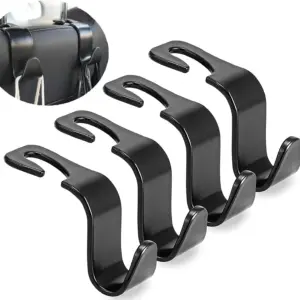
Car Headrest Hooks (4-Pack) – Clip-On Easy Installation
Price range: $2.49 through $4.99 Select options This product has multiple variants. The options may be chosen on the product page -
Pet accessories
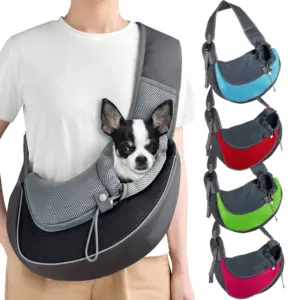
Crossbody Pet Sling Carrier – Hands-Free Travel Tote for Small
Price range: $19.99 through $24.99 Select options This product has multiple variants. The options may be chosen on the product page -
Pet accessories
Portable Dog Water Bottle with Treat Compartment – 350 ml or 550 ml
Price range: $14.99 through $19.99 Select options This product has multiple variants. The options may be chosen on the product page

Frequently asked questions
How many travel gadgets should I actually pack?
Fewer than you think. Start with three: something that organizes, like cubes or pouches; something that powers, like a bank and a multi-port charger; and something that makes sitting still bearable. Add a fourth only when a specific trip genuinely demands it. Anything past that tends to travel out and travel back untouched, trip after trip.
Are packing cubes worth it for a short trip?
For two nights, usually not. One pouch for cables and one for toiletries does the job fine. Cubes start earning their keep around the four-day mark, when you’re living out of the bag and want clothes findable without unpacking. They also help when two people share a suitcase, since everyone gets a lane and nobody excavates the other’s shirts.
What do people forget most often?
The wall charger, not the cable. Cables get grabbed because they’re visible; the brick is usually behind furniture. The fix is a second, travel-only charging set that lives permanently in your bag pouch, so packing it isn’t a choice you have to make. The same trick works for adapters, spare elastics and a small folded tote.
Pack the boring stuff. The gear that earns its space is almost never the gear that photographs well; it’s the flat pouch that means you’re not on the floor at the gate hunting a cable while your group boards. For the annoyances waiting at home, our gadget guides work through them one room at a time.