The dog is panting and the nearest tap is twenty minutes away
It was cooler when you set out. Now she is doing the wide, fast panting, has stopped reading the hedges, and is walking on the shaded side of everything. So you do what everyone does: cup a hand under a bottle and pour, and she gets perhaps a third of it while the rest goes down your sleeve and onto the pavement. Then you carry a half-empty open bottle for the rest of the way home.
The alternatives are a bowl you did not bring or a bag you have to wash out
A folding bowl means carrying a bowl and a bottle and finding a third hand to hold the lead. A bottle loose in a bag means the day it is not quite shut, and there is a particular sinking feeling on discovering that a rucksack has been slowly drinking for the last hour. Treats have the same problem in reverse — a handful in a coat pocket, going soft, collecting grit, and gone by the time you actually need them for the recall that matters.
One bottle that pours, catches and carries the treats
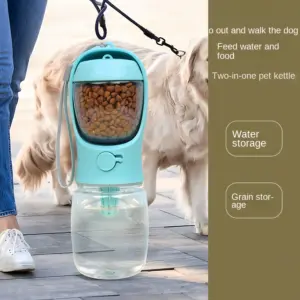
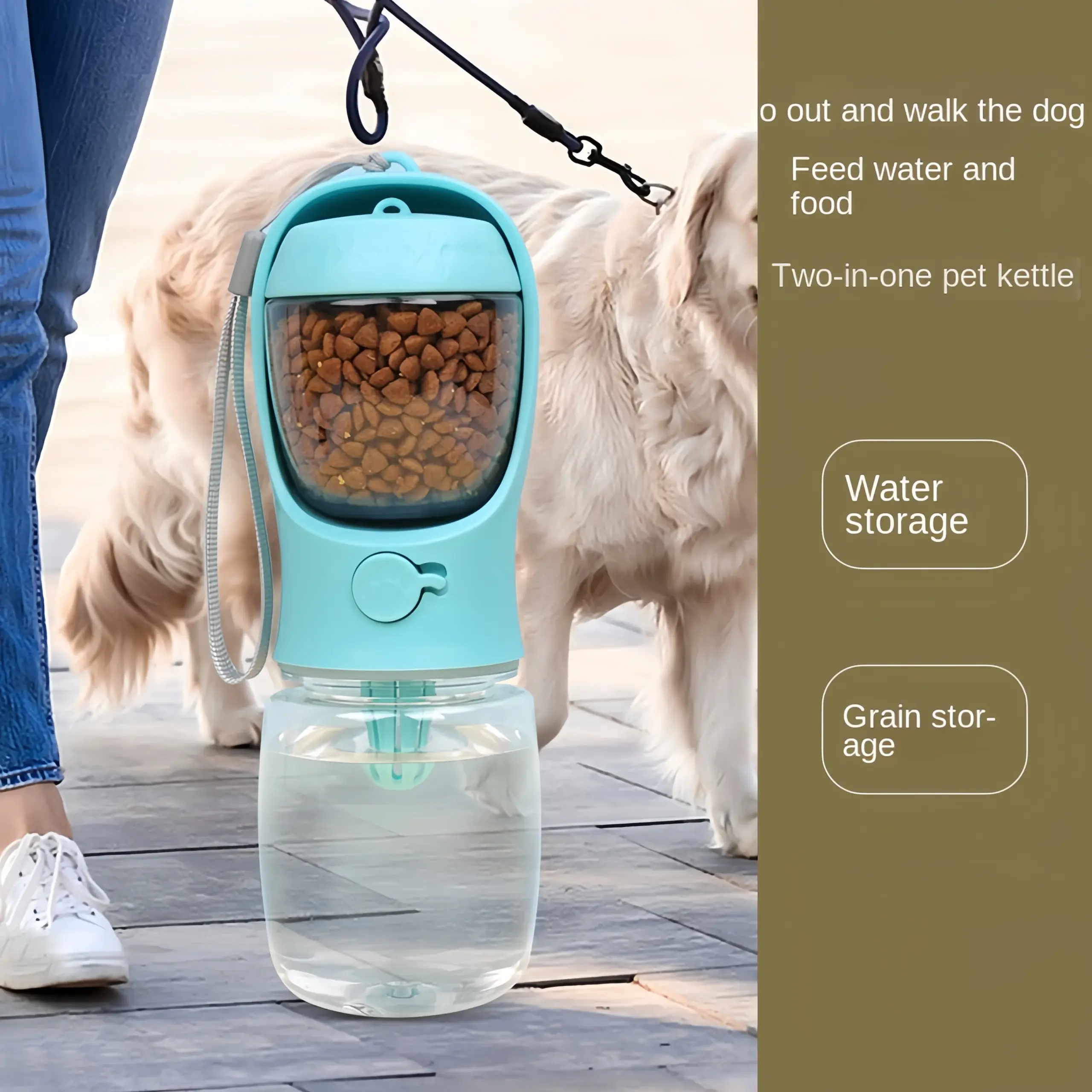
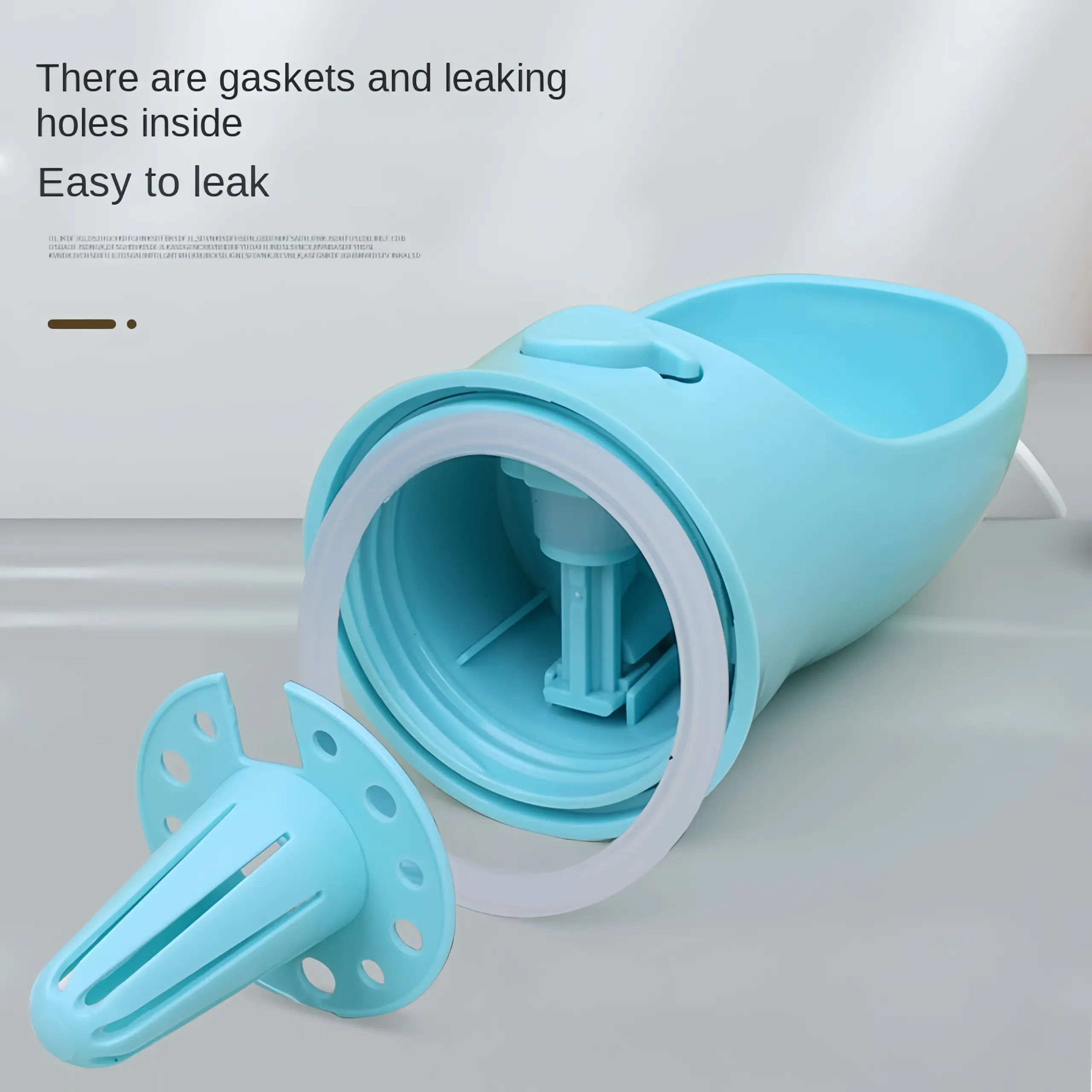
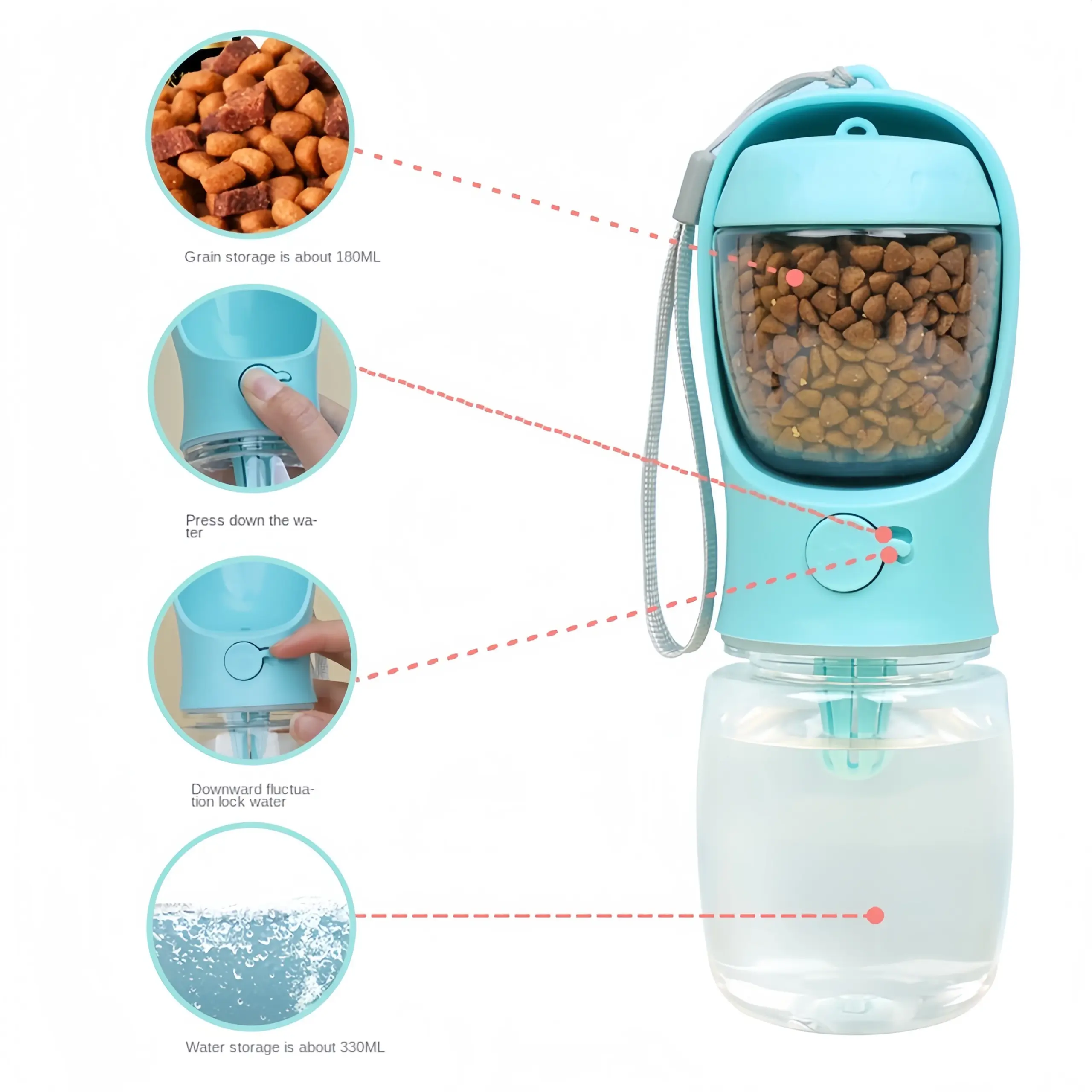
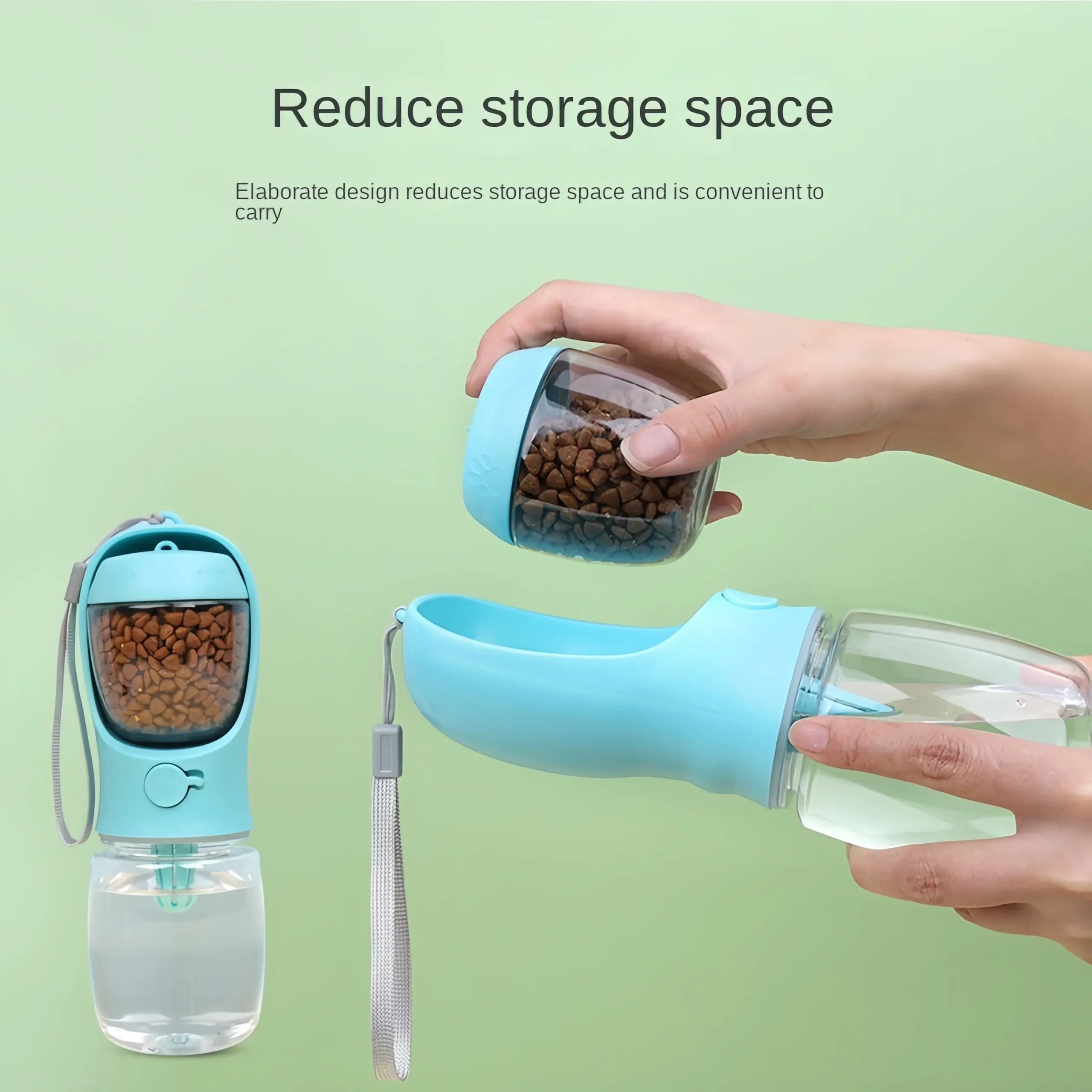
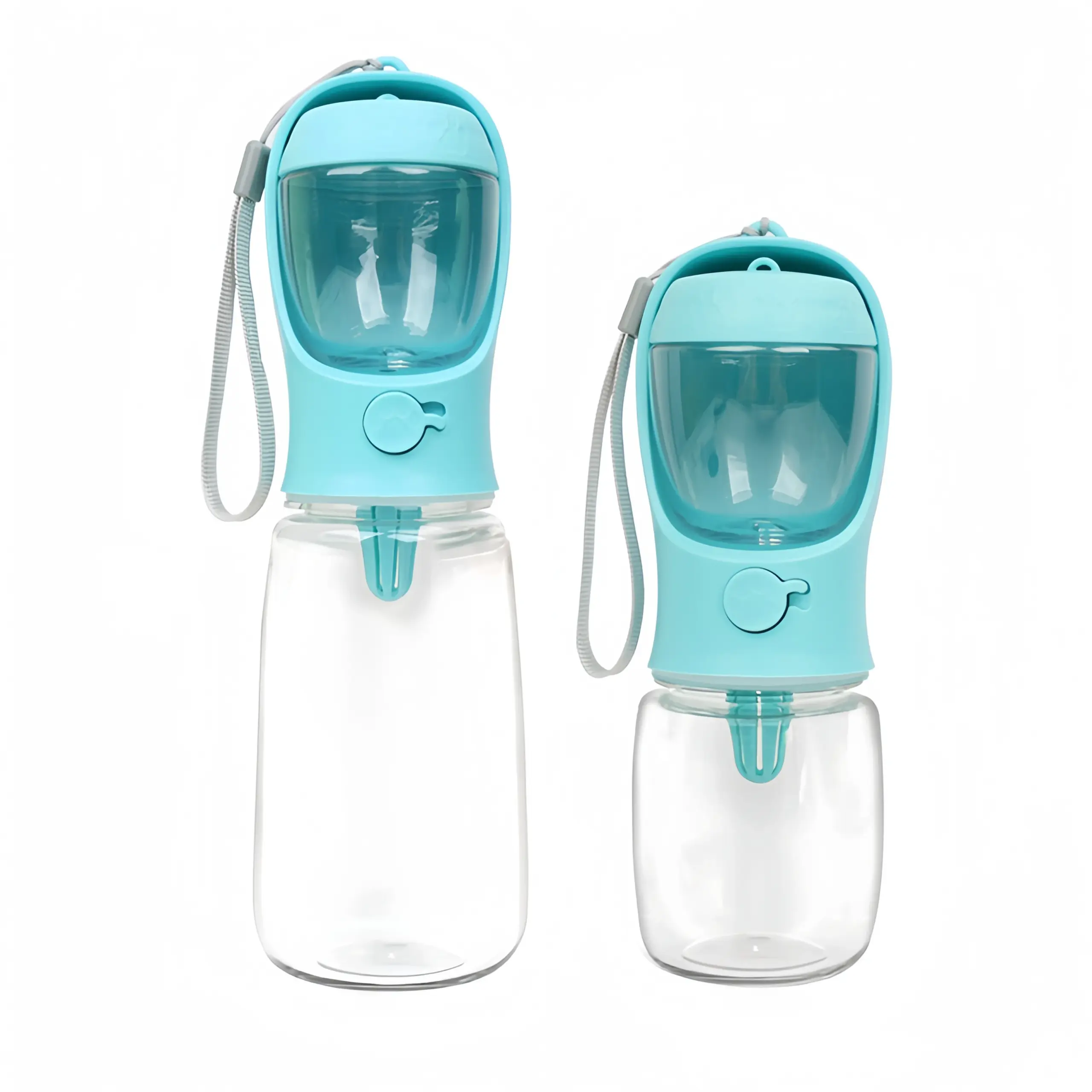
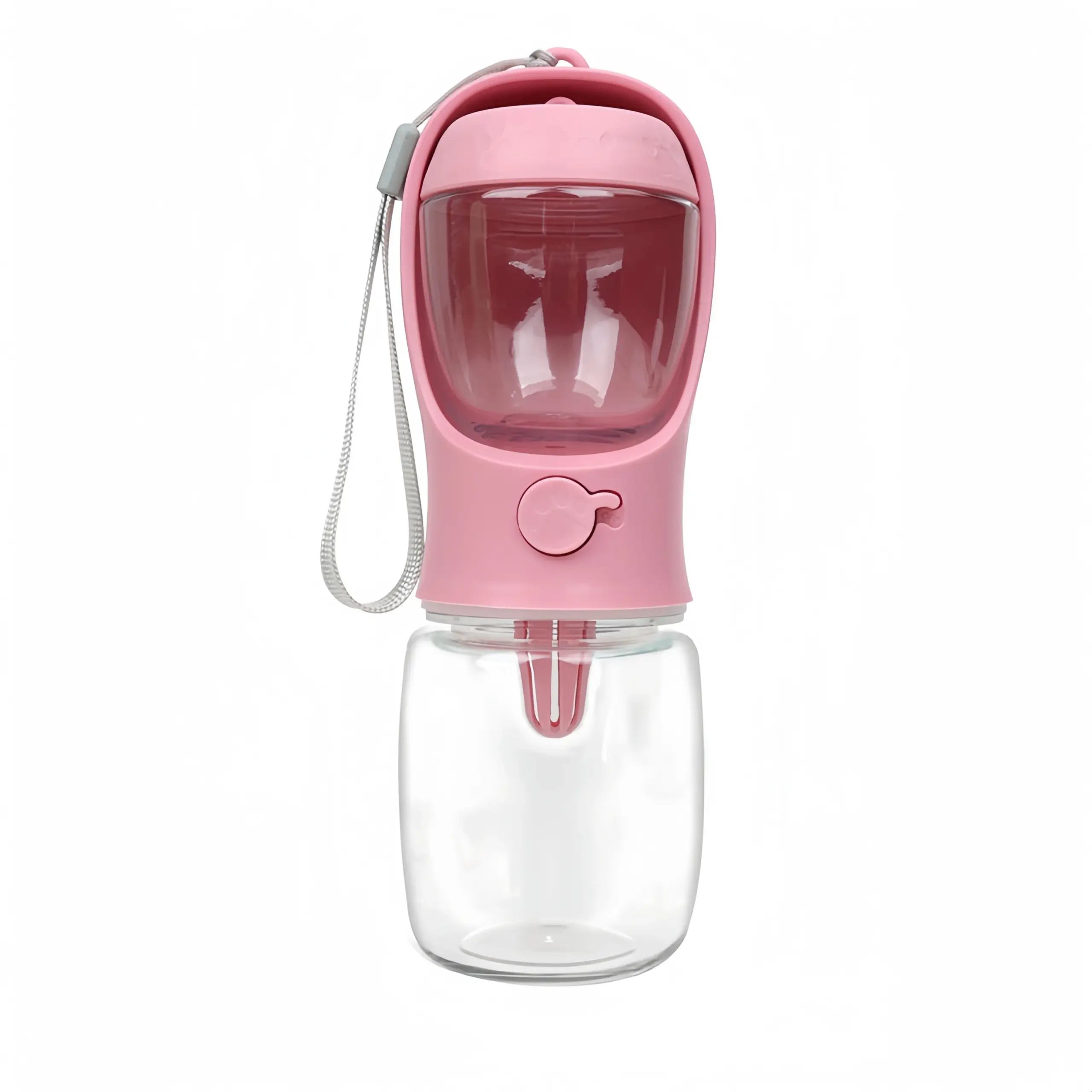
The lid on this one folds out to make a shallow trough at the top of the bottle: press the button, water flows into it, and the dog drinks from the bottle itself. Whatever she leaves tips back inside rather than onto the ground, so nothing is wasted and there is no bowl to dry off and put away. It works one-handed, which is the specification that actually matters when the other hand has a lead in it. Underneath, a separate screw-off compartment holds treats or a portion of dry food, kept apart from the water.
It comes in 350 ml or 550 ml, in pink, white or blue, and the whole thing is 22 cm tall and about 280 g empty — long and thin enough for a bottle pocket rather than the main compartment of a bag. The 350 ml suits a small dog and an hour out; the 550 ml is the one for summer, hills and anything longer. The treat compartment is best kept for dry treats: it is a compartment, not an airtight seal. It appears in our guide to travel gadgets that earn their luggage space.