Review: The Steam Deck OLED has Changed How People Play
Published: 2026-01-31 09:59 AM
Author: Garret Simmons
Handheld gaming has existed for decades, but few devices have managed to redefine what it means to play on the go. Over the past year, one gadget has dominated gaming TikTok, YouTube Shorts, and Reddit feeds—not through flashy marketing, but through genuine word-of-mouth momentum: the Steam Deck OLED.
This upgraded version of Valve’s handheld gaming PC isn’t just a minor refresh. It represents a meaningful evolution of a device that already blurred the line between console gaming and PC flexibility. The Steam Deck OLED doesn’t try to compete with smartphones or traditional consoles. Instead, it creates its own category—one where high-quality gaming fits into everyday life without compromise.
Why the Steam Deck OLED Is Trending Everywhere
Short clips of people playing AAA games on the couch, in bed, on flights, or during commutes have become increasingly common. What makes the Steam Deck OLED stand out in these videos isn’t novelty—it’s how normal it makes high-end gaming feel outside of a desk setup.
The OLED model addresses the biggest requests from the original Steam Deck community: better screen quality, improved battery life, lighter weight, and refined ergonomics. The result is a device that feels more polished, more immersive, and more comfortable for long sessions.
In a social-media-driven world where authenticity matters, the Steam Deck OLED thrives because it delivers exactly what it promises.
A Display That Transforms the Experience
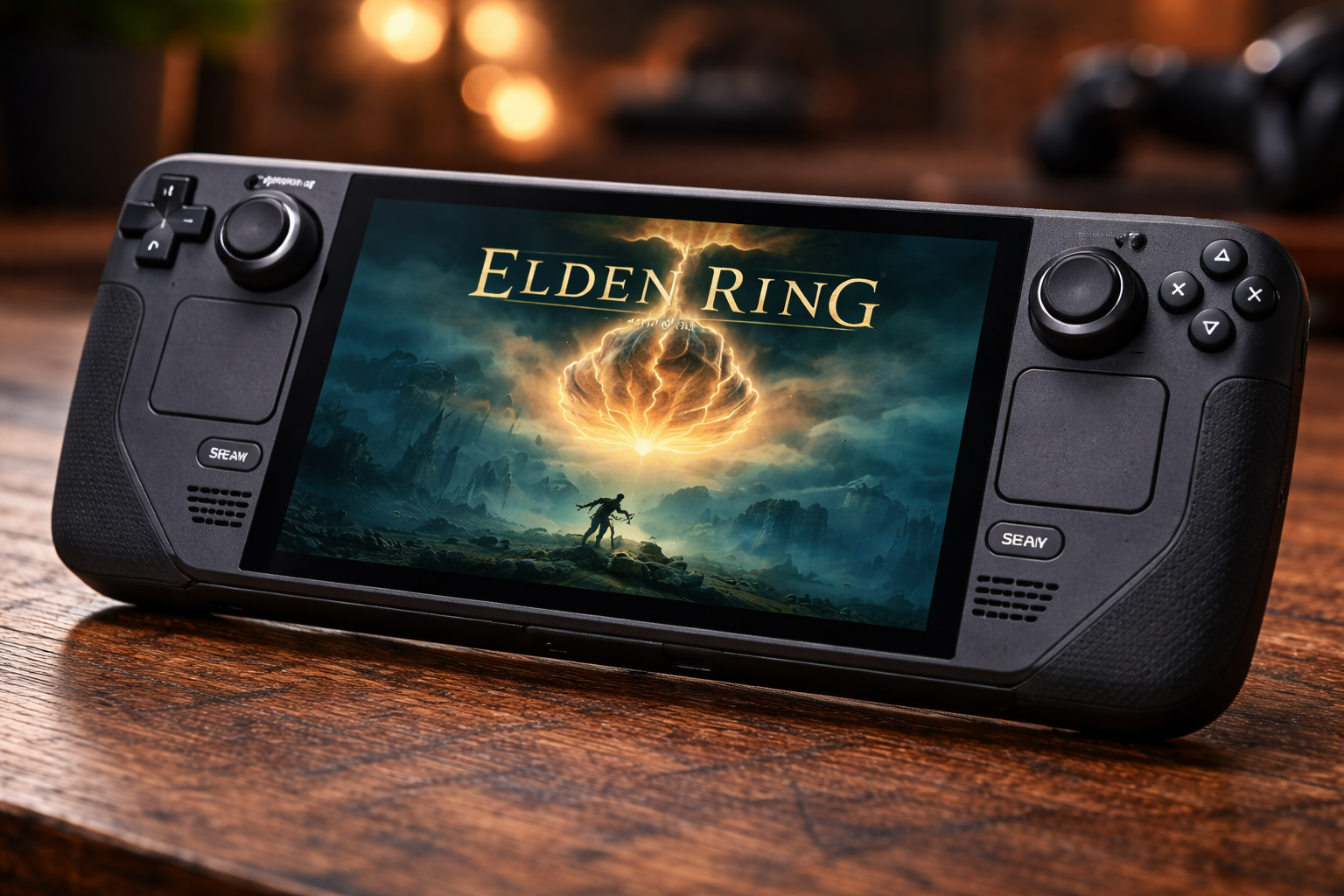
The most noticeable upgrade is right in the name. The 7.4-inch OLED display is vibrant, sharp, and immediately impressive. Blacks are deep, colors pop naturally, and contrast is dramatically improved compared to the original LCD version.
Games feel more alive, whether it’s atmospheric lighting in story-driven titles or fast-moving visuals in action games. Text is clearer, UI elements stand out better, and motion feels smoother thanks to the improved refresh rate.
This screen alone elevates the entire experience, making handheld gaming feel less like a compromise and more like a premium option.
Performance That Holds Up in Real Use
At its core, the Steam Deck OLED remains a portable gaming PC, capable of running a vast library of PC games. From indie favorites to major AAA releases, performance is consistently solid when settings are tuned appropriately.
Valve’s software optimizations play a major role here. Games marked as “Deck Verified” tend to run smoothly out of the box, with control layouts and performance profiles already optimized. For users who want to tweak graphics settings, the flexibility is there—but it’s never mandatory.
What’s particularly impressive is how stable performance feels across long sessions. Improved thermals and efficiency in the OLED model mean less fan noise and better sustained gameplay without discomfort.
Battery Life That Finally Matches the Vision
One of the most practical improvements in the Steam Deck OLED is battery life. Thanks to a larger battery and a more power-efficient display, real-world playtime sees a noticeable boost.
For lighter games or indie titles, sessions can stretch comfortably into several hours. Even more demanding games benefit from smarter power management, making the device far more travel-friendly than before.
This improvement alone addresses one of the main concerns raised about the original Steam Deck and makes the OLED version far more versatile.
Comfort and Build Quality
The Steam Deck OLED feels refined in hand. It’s slightly lighter than its predecessor, with improved weight distribution that makes longer sessions more comfortable. The controls are well-placed, responsive, and familiar to anyone with console gaming experience.
Analog sticks, triggers, and trackpads all feel deliberate, offering multiple input options depending on the game. This flexibility allows everything from fast-paced shooters to strategy games to feel playable without external accessories.
Despite being a powerful device, it doesn’t feel fragile or overly delicate. It’s built to be used, carried, and enjoyed regularly.
Software Experience and Game Library
One of the Steam Deck’s biggest advantages is its integration with the Steam ecosystem. Existing game libraries carry over instantly, eliminating the need to repurchase titles or subscribe to additional services.
The SteamOS interface is streamlined for handheld use, with quick access to games, settings, and performance controls. Updates continue to improve usability, adding features that make navigation smoother and customization easier.
Beyond Steam, the device supports other platforms and applications for users who want more flexibility. While this isn’t the primary selling point for everyone, it reinforces the idea that the Steam Deck OLED is more than just a console—it’s a platform.
Why the Steam Deck OLED Appeals Beyond Hardcore Gamers
Part of the Steam Deck OLED’s appeal lies in how it fits into modern lifestyles. It doesn’t demand a dedicated gaming space or long setup times. You pick it up, play for a few minutes or a few hours, and put it down.
This accessibility has made it especially popular in short-form content, where creators showcase quick gaming moments without elaborate setups. It feels personal, flexible, and refreshingly straightforward.
In many ways, the Steam Deck OLED succeeds because it respects the player’s time.
Things to Keep in Mind
While the Steam Deck OLED offers impressive versatility, there are a few considerations:
-
It’s larger than traditional handheld consoles
-
Not all PC games are perfectly optimized for handheld play
-
Storage choice matters for larger game libraries
None of these are deal-breakers, but they’re worth understanding before buying.
Final Thoughts
The Steam Deck OLED isn’t just an upgrade—it’s a statement about where gaming is headed. By combining a stunning display, improved battery life, thoughtful design, and access to an enormous game library, it delivers a handheld experience that feels genuinely complete.
Its popularity on social media isn’t driven by hype alone. It’s driven by people actually using it, enjoying it, and sharing that experience organically.
For anyone looking for a powerful, flexible, and modern way to game without being tied to a desk or TV, the Steam Deck OLED stands out as one of the most compelling gadgets available today.